.svg)


%20(1200%20x%20800%20px)%20(30)%20(1).png)
If you own or manage apartment communities, NOI is the number that drives every decision. It is the clearest measure of whether a property is performing, and it shapes everything from valuations to capital allocation.
There are two ways to grow NOI: increase revenue or reduce operating expenses. Most owners focus on rent growth and occupancy, and rightfully so. But there is a category of operating expense that quietly eats into margins year after year, and most portfolios are not optimizing for it.
That category is security.
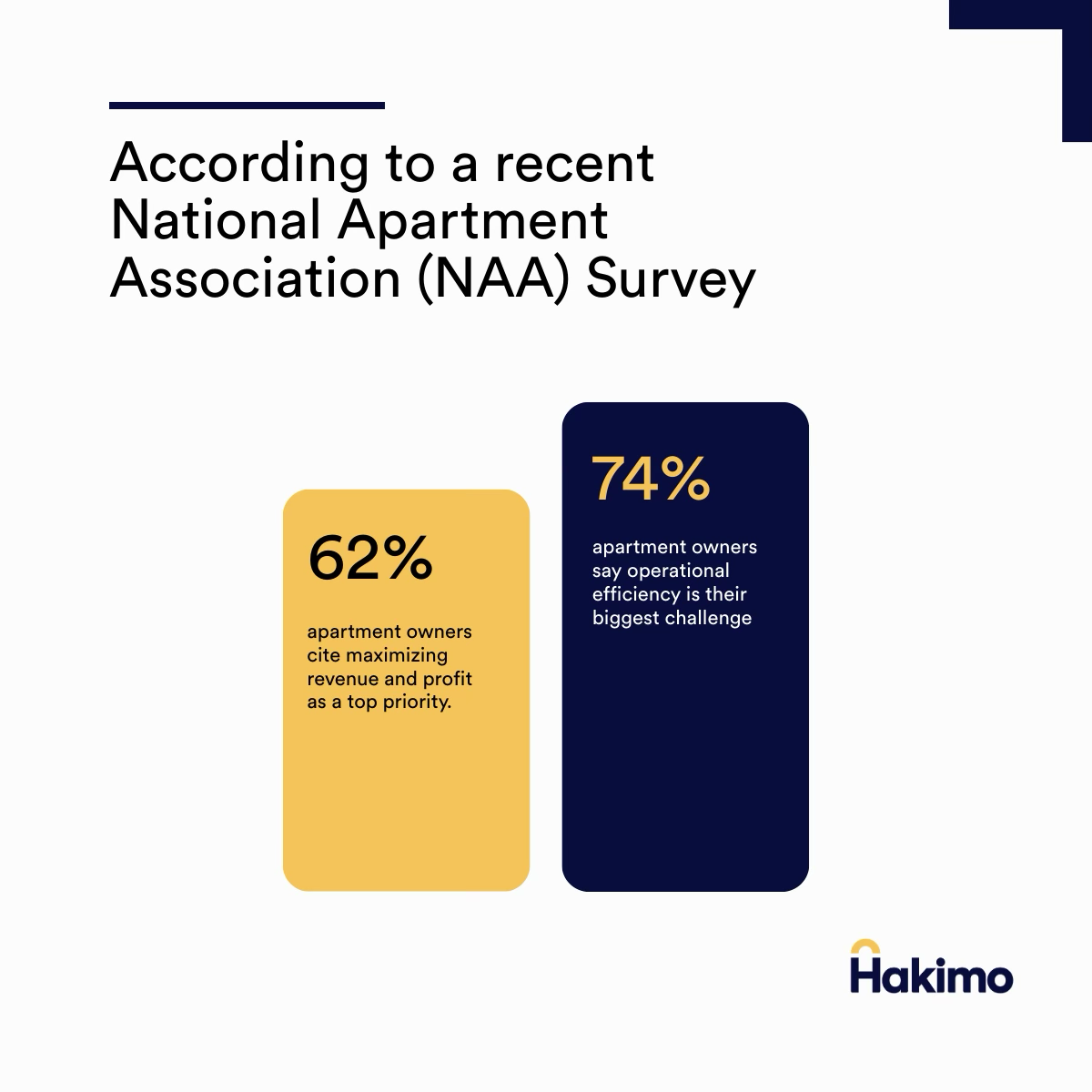
According to a recent National Apartment Association survey, 74% of apartment owners say operational efficiency is their biggest challenge, and 62% cite maximizing revenue and profit as a top priority.
Security sits right at the intersection. It is one of the largest line items on many properties, and when it fails, it directly hurts revenue through resident complaints, vacancies, and property damage.
Hakimo is an AI-powered physical security platform built for multifamily. It turns existing cameras into a proactive, always-on security layer that protects NOI, reduces guard dependency, and gives teams reliable coverage around the clock, without new hardware.
Security guards are expensive. When you factor in wages, benefits, overtime, agency fees, and management time, a single full-time security guard can cost $275,000 per year. Most properties need more than one and guard coverage is rarely consistent. Guards call in sick. They miss things. They cannot be in two places at once.
Hakimo's AI Operator monitors your cameras and access control systems 24 hours a day, 7 days a week, without breaks, without overtime, and without sick days. It can handle tasks that normally require on-site guards, which means you can:
Lower labor costs mean lower operating expenses, leading to higher NOI. But here is what that actually looks like on the ground. It means the community manager is not burning half the day managing guard schedules, chasing shift coverage, and handling escalations from the night before. It means your regional VP is not fielding calls about a guard no-show at 11pm.
It means your operating statement stops showing a security line that grows every year without a corresponding improvement in outcomes. When you replace that model with something smarter, the savings are real, and they compound across every property in your portfolio.
Traditional security cameras record what happens. But recording something after it occurs does not prevent the damage, the theft, or the liability claim. Hakimo is different and it watches your cameras in real time and flags problems as they develop.
Hakimo can detect:
When Hakimo spots a threat, it can intervene immediately, including an AI or a manual talkdown through on-site speakers to deter someone before a situation escalates.
This proactive approach prevents the incidents that lead to property damage, insurance claims, and lawsuits. Every prevented incident is money saved which means fewer repair bills, fewer legal costs, and lower insurance exposure.
False positives are one of the most overlooked sources of operational waste in multifamily security. When cameras or motion sensors trigger on a passing car, a blowing branch, or a resident coming home late, someone has to respond. That means paying a guard to investigate something that turned out to be nothing or worse, paying a fine to local authorities for repeated unnecessary dispatches.
Hakimo filters out the noise and highlights genuine security events that require attention. It can tell the difference between a real threat and a false positive, so your team only gets alerted when something genuinely requires attention.
The benefits are straightforward:
This lets you focus on what actually matters: leasing, resident service, and running the property well. And they are not just operational priorities, but direct drivers of NOI.
When your team is buried in security escalations, all three suffer. Occupancy dips. Renewals soften. Costs creep up. Fixing the security model does not just reduce the guard bill but frees your team to protect the revenue side of NOI at the same time.
Security problems do not just cost money directly. They cost you residents.
When a resident does not feel safe in their building, when they see strangers in the garage, hear about a break-in, or feel like nothing is being done about repeated trespassing, they start looking for somewhere else to live. And when residents leave, you lose rental income and spend money on turning the unit, marketing it, and leasing it again.
Hakimo creates a visibly safer environment. Residents see that their building has real, active monitoring, not just cameras on a wall that nobody is watching. That confidence leads to:
Stable occupancy and strong renewals are among the most reliable drivers of NOI growth. Security plays a bigger role in those outcomes than most owners realize.
Security has always been treated as a cost you accept, not a lever you pull. Hakimo changes that.
When you reduce guard headcount, cut overtime, eliminate false positives, and prevent incidents before they happen, the savings are immediate and measurable. Reducing just two or three guard positions covers the cost of the platform many times over.
Here is what the numbers look like from a real multifamily portfolio (15+ properties):
That is not a long-term bet. It is a decision that pays for itself before the end of the first quarter and keeps compounding from there.
NOI growth does not always come from pushing rents higher. Sometimes the biggest opportunity is in the costs you are already paying, and whether you are getting real value from them.
Most multifamily owners are spending significant money on guards and camera systems that are reactive, inconsistent, and hard to measure. Hakimo replaces that model. Instead of paying for hours on-site, you pay for outcomes: threats detected, incidents prevented, false alarms eliminated, and residents who feel safe enough to stay.
That is a direct path to higher NOI, and it works with the camera infrastructure most properties already have.

Varun is a multifamily industry and digital marketing specialist with 11 years of experience, including five years in B2B marketing. As Hakimo’s first marketing hire, he focuses on multifamily trends, operations, security, NOI, and technology adoption.
.png)
.png)


Hakimo is an AI software platform that provides virtual remote guarding & security monitoring, working with surveillance cameras to reduce vandalism, theft, physical threats and unauthorized access




.png)


.svg)
.svg)